




How Big Cobia Get in the Gulf
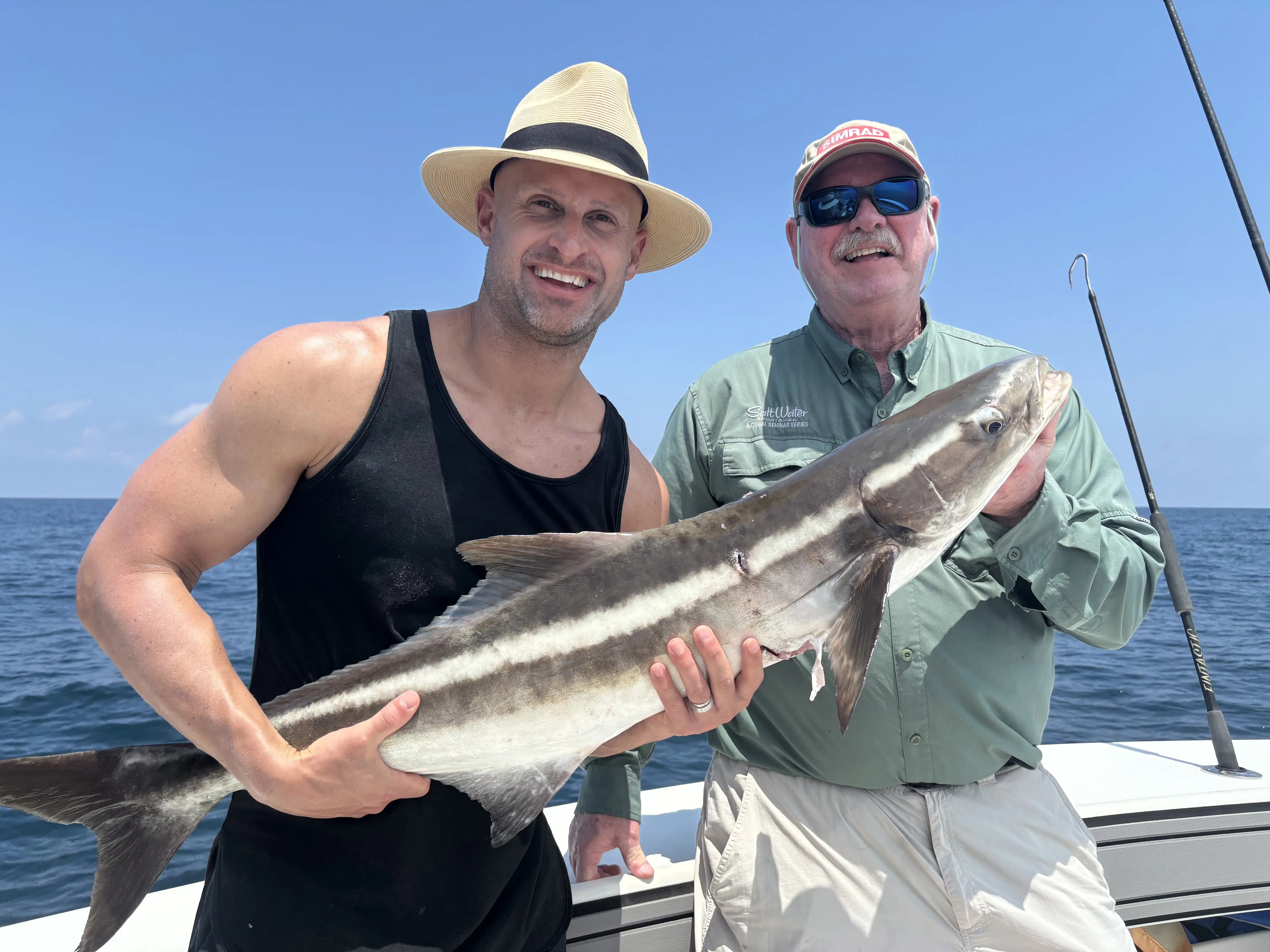
Cobia grow fast and can reach impressive sizes. Many offshore cobia commonly weigh between about 10 and 50 pounds, with average catches often around 30 pounds.
Larger trophy fish can exceed 100 pounds, with maximum recorded sizes approaching roughly 6 feet long and well over 100 pounds. The Florida state record is 130lb.
Their size combined with raw strength makes cobia one of the most exciting offshore species to hook into, especially when targeting them over deeper structure.
Best Baits for Offshore Cobia Fishing
Cobia are opportunistic feeders and will strike a wide range of natural baits. Some of the most productive offshore options include:
- Artificial eels
- Live crabs
- Live baitfish such as pinfish or scaled sardines
- Jumbo live shrimp
Live crabs and small fish are widely considered top producers because cobia naturally feed on crustaceans and baitfish offshore.
Anglers often present bait near the surface or slightly deeper depending on where fish are holding in the water column.
Proven Offshore Techniques for Catching Cobia
Successful offshore cobia fishing typically focuses on structure and moving water. Medium to heavy tackle is commonly used because cobia are strong fighters that can make long, powerful runs once hooked.
Chumming can help bring cobia closer to the boat by attracting baitfish, which in turn draws in predatory fish offshore.
Some anglers also use jigs, bucktails, or eel-style lures when fish are actively cruising or when covering large offshore areas.
Why Offshore Cobia Fishing Is Exceptional Near Madeira Beach
The offshore waters surrounding John’s Pass and greater Pinellas County offer an ideal environment for cobia due to warm Gulf water temperatures, strong bait populations, and extensive offshore structure.
Cobia often travel alone or in small groups, making every encounter feel like a true big-game opportunity. Fishing offshore here provides the chance to hook strong, fast-moving fish while enjoying the open Gulf environment, making cobia one of the most memorable species anglers target when fishing offshore from Madeira Beach.